

Shawnee County auctioned more than 100 vacant lots after developer Jim Klausman’s companies failed to pay millions in property taxes, penalties and special assessments
TOPEKA, Kan. — A southwest Topeka subdivision that spent years trapped between unfinished development, unpaid taxes and controversial negotiations with city leaders may finally be headed toward a building boom.
More than 100 vacant lots in Lauren’s Bay were sold to three development groups during a Shawnee County judicial tax foreclosure auction on June 10, 2026. The sale effectively ended years of control by companies associated with Topeka developer Jim Klausman, whose properties accumulated millions of dollars in unpaid property taxes, penalties and special assessments.
The three primary buyers were Diamond Homes of Topeka, formerly known as Dultmeier Homes, which purchased approximately 40 lots; Drippé Homes, which purchased approximately 12 lots; and Skill Pro Group, which purchased approximately 52 lots.

Several of the buyers told This Is Topeka that construction could begin within weeks.
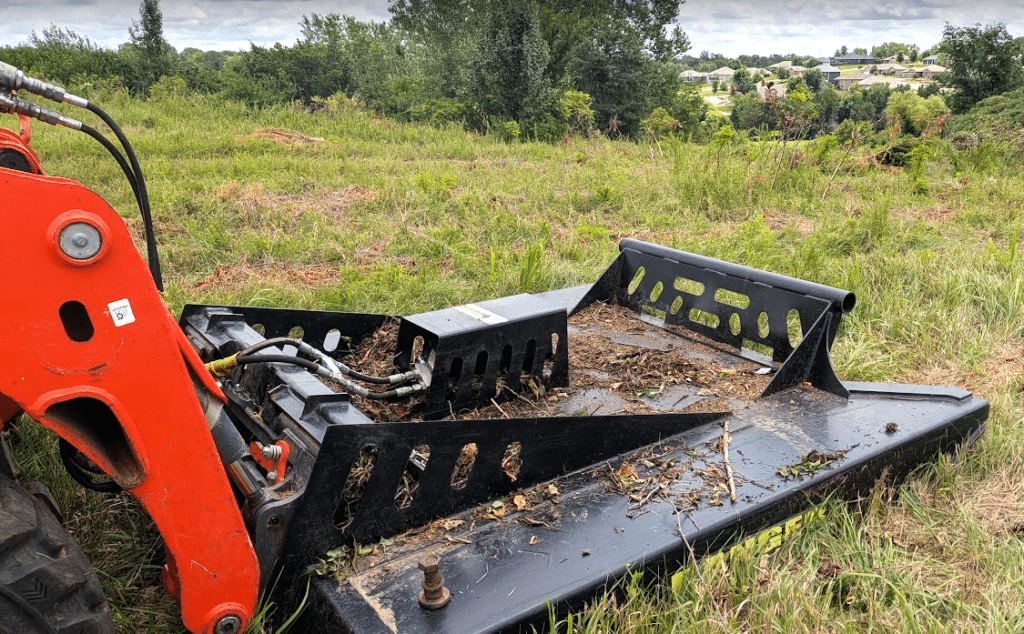
One builder has already started clearing trees, brush and other overgrowth left behind as the undeveloped portions of Lauren’s Bay sat largely untouched. That builder said foundation work is expected to begin shortly after Aug. 1.
“After years of watching this beautiful area go to waste while being inaccessible to other builders, we welcome the challenge of building here,” the builder told This Is Topeka. “We will start with 10 to 15 homes in the next 12 months.”
Another builder said the company expects to construct six homes during the next year.

That builder also questioned why the county foreclosure process took so long and why earlier proposals would have allowed Klausman’s companies to avoid paying significant portions of what was owed.
A neighborhood built before the houses came
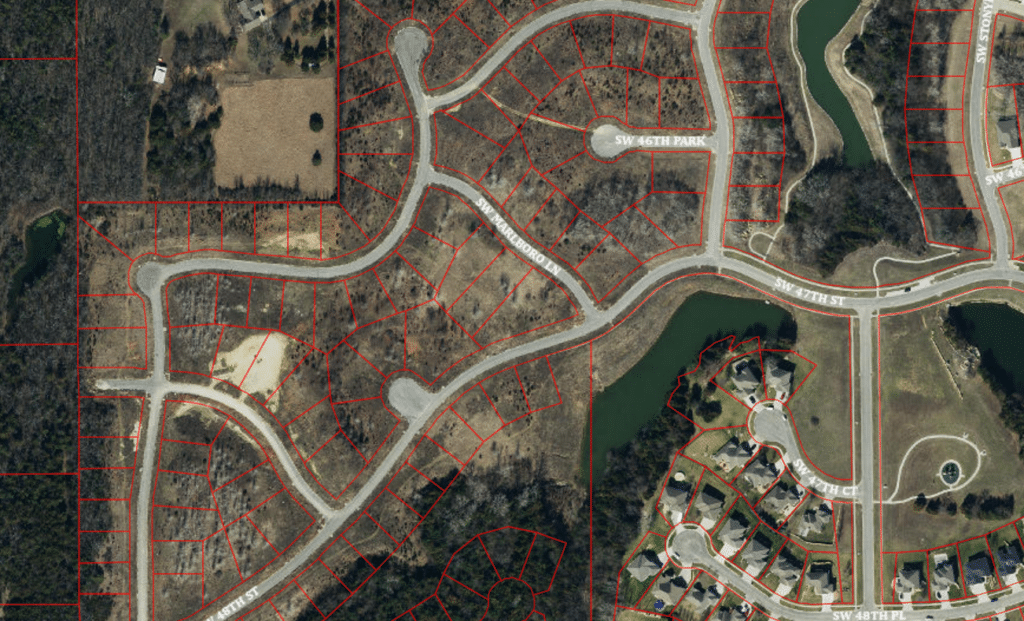
Lauren’s Bay is located near Southwest 47th Street and Southwest Wanamaker Road in the Auburn-Washburn School District.
The subdivision was originally planned as an upscale residential neighborhood, but its development followed an unusual structure.
Around 15 years ago, Topeka entered into an agreement that resulted in roads, sewer lines, water infrastructure and other public improvements being constructed before most of the houses were built.
That differed from the city’s more conventional approach, in which infrastructure is generally extended as sections of a subdivision are developed and homes are constructed.
District 6 City Councilman Spencer Duncan previously described the Lauren’s Bay arrangement as an experiment the city had not commonly used before and has not repeated since.
The infrastructure was completed. The anticipated number of houses was not.
Lauren’s Bay consequently became a mostly developed subdivision without enough homes to support the debt associated with its roads, utilities and other improvements.
What are special assessments?
Special assessments are charges placed against properties that benefit from specific public improvements.
Instead of requiring taxpayers throughout Topeka to pay for infrastructure serving one new subdivision, the city can finance the work and assess the cost against the individual properties benefiting from it.
The charges are collected with property taxes over a period of years.
Unlike a conventional loan made directly to a developer, a special assessment is attached to the property. When a property is sold, the assessment generally remains with the land unless it is paid, refinanced or otherwise resolved through an agreement with the city.
If the taxes and assessments remain unpaid, the county may eventually foreclose on the property.
At Lauren’s Bay, years passed without enough homes being built or enough assessments being paid. The delinquent balance continued to grow as taxes, interest and penalties accumulated.
By September 2025, local reporting placed the amount owed by Klausman and his affiliated properties at more than $7 million in back taxes, fees and special assessments.
City repeatedly considered another deal
Despite the unpaid obligations, Topeka officials spent more than a year considering proposals intended to restart construction at Lauren’s Bay.
In 2024, the city began negotiating an arrangement involving certain lots in the subdivision. The proposal generally contemplated forgiving or reducing past-due special assessments in exchange for payment of delinquent property taxes and a commitment to develop the properties.
Supporters argued that the city needed housing and that leaving infrastructure-equipped lots vacant would do nothing to recover the money already invested in Lauren’s Bay.
Duncan said the city’s housing shortage affected both existing residents and Topeka’s ability to attract new workers and businesses. Homes built in Lauren’s Bay were expected to sell for more than $300,000, adding inventory at the upper end of the local housing market.
The City Council voted 8-1 to begin negotiations with Klausman on one version of the development proposal. Councilwoman Christina Valdivia-Alcala cast the lone opposing vote.
The proposal, however, became increasingly controversial as the public learned the extent of the unpaid obligations.
In 2025, city leaders considered whether to waive special-assessment penalties on parcels held by Marney Properties LLC in return for payment of unpaid property taxes and assessments.
Residents argued that forgiving penalties for a major developer created a double standard while the city continued collecting taxes, utility bills, late charges and liens from ordinary residents.
Topeka resident Danielle Twemlow told council members that residents were frustrated by the city’s willingness to accommodate a developer while increasing utility rates and pursuing unpaid balances from families with far fewer resources.
“It’s an intentional decision by this developer not to pay his taxes,” Twemlow said at the time.
The council tabled that proposal rather than taking a final vote.
Klausman later sought another extension or expansion of the tax arrangement for additional Lauren’s Bay properties. In November 2025, the council again postponed action.
No agreement ultimately prevented the properties from proceeding through Shawnee County’s judicial foreclosure process.
The county takes the properties to auction
The Lauren’s Bay parcels were included in Shawnee County District Court Case No. SN-2025-CV-000711.
The county conducted the auction online through GovEase from 11 a.m. to 2 p.m. on June 10, 2026. The sale was advertised specifically as a vacant-lot auction.
Kansas judicial tax foreclosure sales are governed by K.S.A. 79-2801 and related statutes.
Under that process, the Shawnee County Counselor files an action in district court in the name of the Board of County Commissioners against the owners and anyone else claiming an interest in the affected real estate.
Vacant or abandoned properties may become eligible for foreclosure after taxes have been delinquent for at least one year. Commercial properties generally require two years of delinquency, while homestead properties generally require three.
The foreclosure action eventually extinguishes most ownership interests and allows the county to sell the property to recover at least part of the unpaid taxes.
Lots grouped to discourage speculation
Rather than auctioning every Lauren’s Bay lot separately, the county assembled many of the properties into larger groups.
According to information provided by the Shawnee County Counselor’s Office, that decision was intentional.
County officials were concerned that individual lots could be purchased cheaply by out-of-state bidders or speculators with no plans to build homes, maintain the properties or participate in completing the subdivision.
Selling the properties in larger packages made the auction more expensive for casual bidders but increased the likelihood that established builders or development groups would purchase enough contiguous lots to begin substantial construction.
The strategy appears to have worked.
The three principal buyers all have development or construction interests, and at least two have publicly indicated that homes will be built in Lauren’s Bay.
Diamond Homes of Topeka, formerly Dultmeier Homes, is a longstanding local homebuilder. The company now lists Lauren’s Bay among its upcoming Topeka communities.
Drippé Homes builds in Topeka and several other Kansas communities and has constructed the Topeka St. Jude Dream Home for multiple consecutive years.
Skill Pro Group purchased the largest reported share of the auction properties, acquiring approximately 52 lots.
Millions owed, less than $1 million recovered
Although final figures have not yet been publicly itemized by parcel, one builder who purchased a substantial portion of the subdivision told This Is Topeka that the auction generated less than $1 million.
The amount owed on the properties was estimated by that builder at more than $6 million.
Previous public reporting had placed Klausman’s broader delinquent balance at more than $7 million, including taxes, fees and special assessments associated with Lauren’s Bay and other properties.
That means the auction may have recovered only a fraction of the total amount billed against the land.
A tax foreclosure auction, however, is not designed to guarantee that every dollar owed will be recovered. Its primary functions are to return delinquent property to productive ownership, restore future tax payments and prevent abandoned or neglected parcels from remaining indefinitely in default.
When the auction price is lower than the taxes, assessments and penalties owed, the foreclosure sale does not automatically create enough money to make the city, county or other taxing entities whole.
In practical terms, millions of dollars in assessments connected to Lauren’s Bay may never be recovered directly from the former ownership.
The potential long-term recovery instead comes from new construction, rising property values and years of future property-tax collections.
A second chance for Lauren’s Bay
For residents already living in Lauren’s Bay, the auction could bring a dramatic change.
The neighborhood has streets, utilities and large residential lots, but houses remain scattered throughout significant stretches of the development. Undeveloped areas became overgrown as legal disputes and unpaid taxes prevented other builders from gaining access to the land.
New ownership breaks that logjam.
If the builders meet the preliminary schedules they provided to This Is Topeka, between 16 and 21 homes could begin construction during the next 12 months. Additional phases could follow as those homes sell and the builders evaluate demand.
The construction would add housing within the Auburn-Washburn School District, expand Topeka’s property-tax base and make use of infrastructure installed more than a decade ago.
It would also represent a rare instance in which nearly an entire unfinished subdivision moves from one developer’s control into the hands of several competing builders at the same time.
Questions remain over accountability
The sale may resolve the future ownership of the land, but it does not end questions surrounding the original development agreement.
Residents and some builders continue to question why the unpaid taxes and assessments were allowed to accumulate for years, why the city repeatedly considered forgiving portions of the debt and why foreclosure did not occur sooner.
There is also the question of who ultimately absorbs the loss when development-backed special assessments are not paid.
The answer is complicated. The land has now been sold, the former ownership interests have been foreclosed and the new buyers generally begin with titles cleared through the judicial process. But the auction proceeds appear unlikely to cover the full delinquent amount.
The public may therefore recover the value indirectly, through completed homes and future taxes, rather than through payment of the original assessments.
For the builders who bought the properties, the auction created an opportunity to acquire buildable lots in one of southwest Topeka’s most desirable school districts.
For the city and county, it created a path to put long-idle property back on the tax rolls.
For Klausman, it marked the loss of more than 100 lots after years of unpaid obligations and failed negotiations.
And for Lauren’s Bay, a subdivision that spent more than a decade defined by the homes that were never built may soon be defined by construction crews returning to work.