By Jeffery Fogg | This Is Topeka
TOPEKA, KANSAS — NOVEMBER 2, 2026
Politics has become an ugly business. We yell at televisions, argue with strangers on Facebook, and increasingly see the people on the other side of the political aisle as enemies rather than neighbors.
But this morning, in a parking lot near 17th and Fairlawn in Topeka, my 11-year-old son reminded me that politics can still be something entirely different.
It can be personal. It can be civil. And sometimes, it can involve a United States Senate candidate grilling a fifth-grader about The Wizard of Oz.
My son, Hudson, has become something of a political enthusiast this year. Much of that interest can be traced to his teacher at Topeka Collegiate, Mrs. Shelsey Wasserstein, who introduced her students to CNN 10, the student-focused daily news program.
Mrs. Wasserstein has been an amazing addition to Topeka Collegiate. She’s helping her students understand that the world doesn’t begin and end at the classroom door. There are elections, international conflicts, economic decisions, and people making choices that will shape the world these kids inherit.
And Hudson has been paying attention.
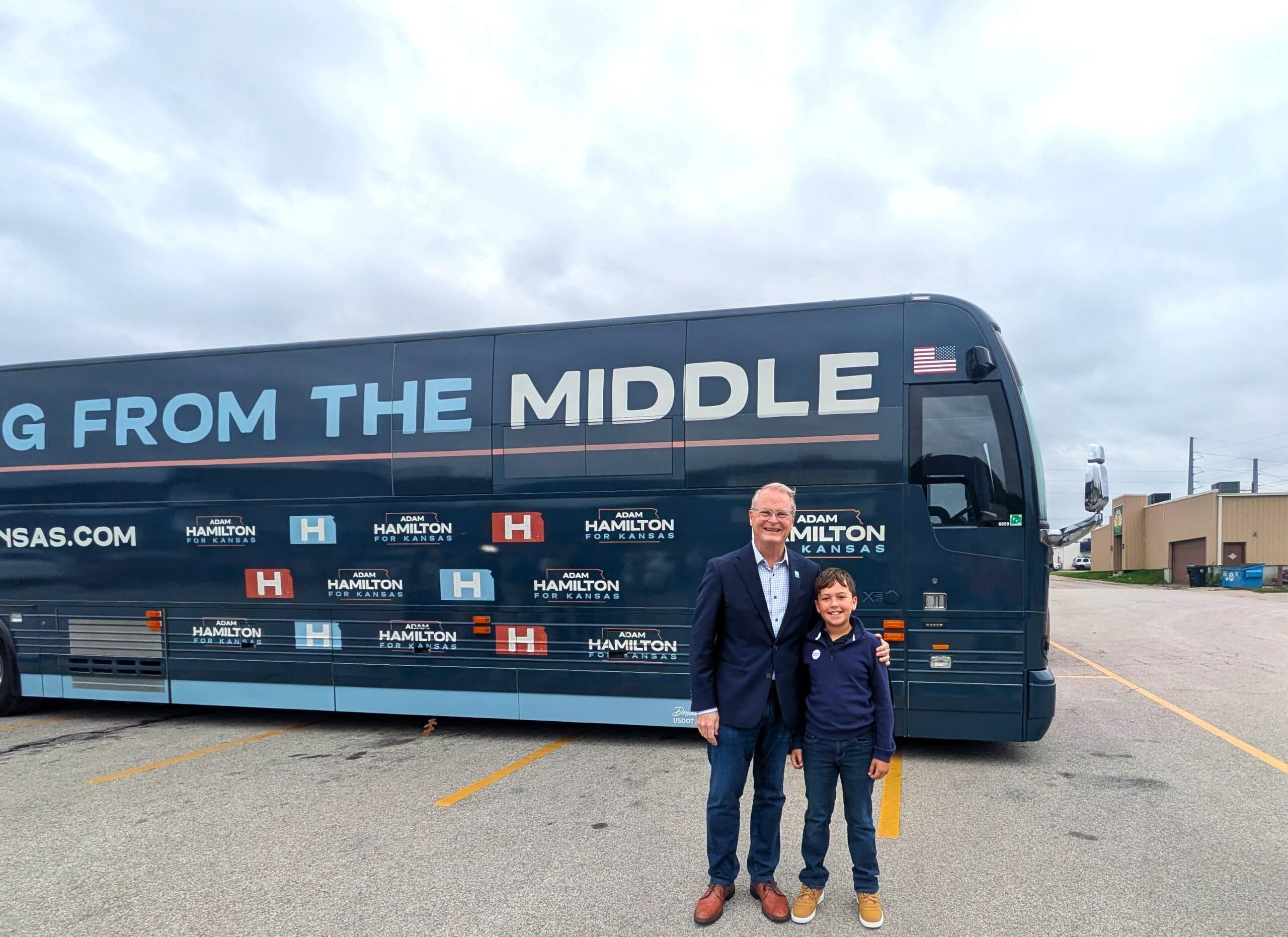
So when he learned that Adam Hamilton, the Democratic candidate for U.S. Senate in Kansas, would be making a campaign stop in Topeka, he wanted to meet him.
I wasn’t particularly interested in going this morning. But Hudson was.
So I said, let’s do it.
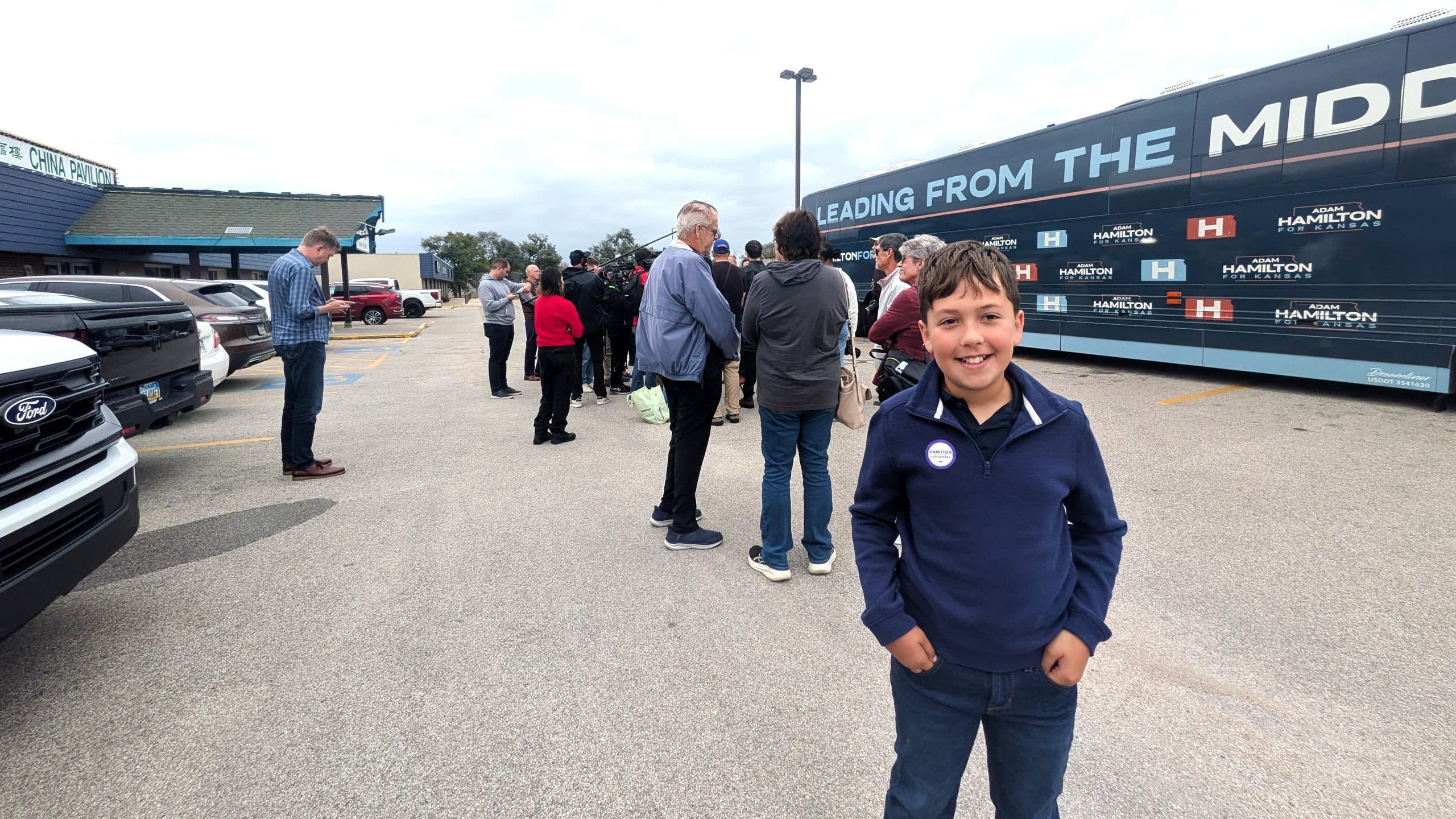
We arrived to find a room of perhaps 30 people waiting for Hamilton’s campaign bus. The candidate has spent much of his campaign crisscrossing Kansas, showing up in communities and talking with voters face-to-face.
And that’s something worth recognizing, regardless of which political party you support.
When Hamilton arrived, his staff learned that Hudson had come specifically to meet him. They asked whether he’d like to ask the candidate a few questions.
Hudson agreed, although he was understandably nervous.
But instead of putting an 11-year-old on the spot, Hamilton turned the tables.
He started asking Hudson questions.
What was the Tin Man missing? Who was made of straw? Which character had a tail?
Suddenly, my son was getting a pop quiz on The Wizard of Oz from a man running for the United States Senate.
For a Kansas kid, I suppose that’s a necessary history lesson.
The exchange was funny, relaxed, and genuinely human. Hudson got to share a little about himself, pose for photographs, and experience something that no television broadcast or classroom lesson could quite replicate.
He got to meet someone who wants to represent him.
At one point, Hamilton suggested that Hudson might become a senator himself someday.
He’s not wrong.
But that’s not why we went.
We went because Hudson wanted to meet the person asking Kansans to send him to Washington. He wanted to see him, speak with him, and decide what he thought for himself.
And I think there’s something profoundly important about that.
Our children are growing up in a political environment dominated by screens. They learn about candidates through television appearances, carefully edited clips, social media arguments, and the endless outrage that passes for political discourse these days.
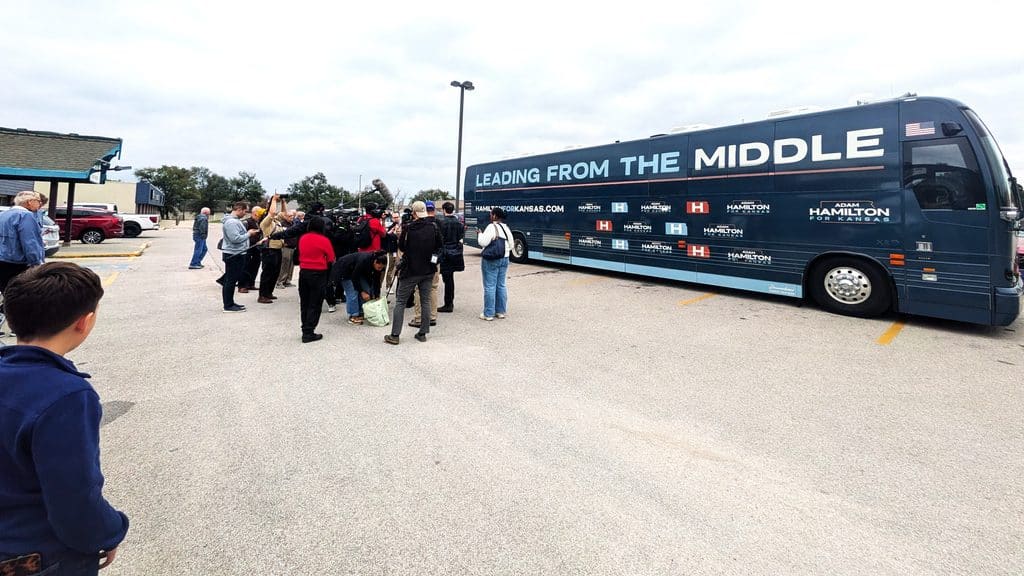
It’s easy to dislike someone on a screen. It’s even easier to dehumanize them.
But it’s much harder to stand across from another human being, look them in the eye, shake their hand, and pretend they aren’t worthy of basic dignity.
Perhaps that’s something we’re missing in American politics.
The ability to stand face-to-face with the people we disagree with, have an actual conversation, and remember that we’re all human beings.
I know today’s politics are uncomfortable for people on every side. I have my own opinions, and I’m certainly not going to pretend otherwise. I care which direction this country takes. I care deeply.
But I also believe that the people asking to represent us have an obligation to show up.
Not just in the communities where they’re guaranteed applause. Not just for the voters who already agree with them. And certainly not just when there’s a television camera nearby.
They need to show up for all of us.
Kansas isn’t one political ideology. It isn’t one race, one religion, one gender, or one economic class. It’s a complicated, diverse collection of people who share a state and, whether we like it or not, a future.
Whoever represents Kansas in Washington has a responsibility to all of those people.
And that responsibility begins with being willing to meet them.
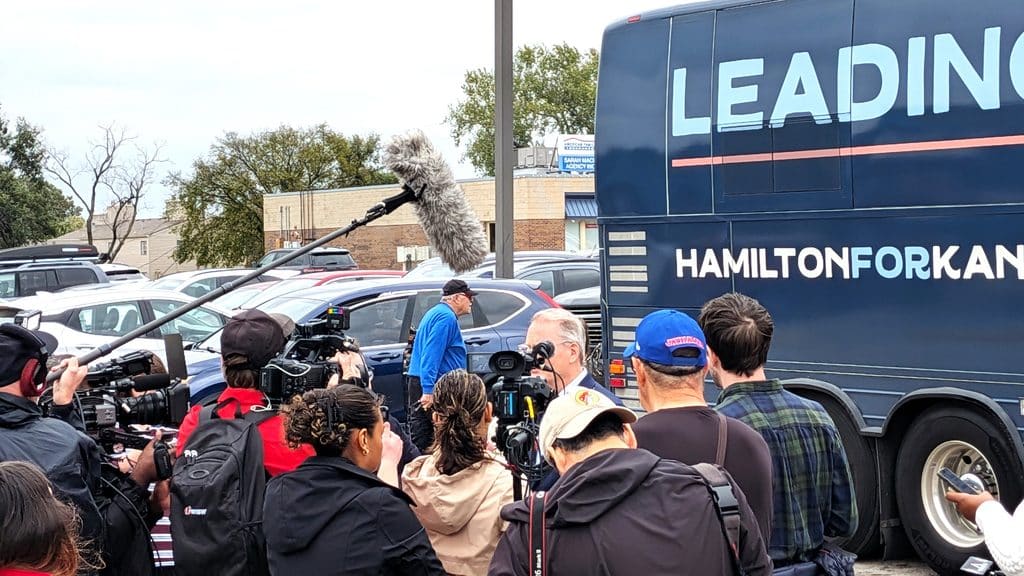
I don’t expect one conversation in a parking lot to fix American politics. But I wonder what would happen if more of our elected officials and candidates spent less time talking at us and more time talking with us.
What if more children got to meet the people whose names appear on campaign signs?
What if political engagement began with curiosity instead of anger?
What if we taught our kids that democracy isn’t just something that happens on television every November, but something they can participate in, question, and eventually help shape?
Tomorrow, Kansans will head to the polls.
Hudson won’t be among them. He’s still a few years away from casting his first ballot.
But I have a pretty good idea who he’ll be rooting for.
And whether his candidate wins or loses, I think Hudson already got something valuable out of this election.
He learned that the people who want to represent us are real people. People you can walk up to, speak with, laugh with, and ask questions of.
He learned that his voice matters, even at 11 years old.
And perhaps most importantly, he learned that if you want to be part of the political process, sometimes all you have to do is show up.
I didn’t particularly want to go this morning.
I’m glad he did.
Because today, my son didn’t just meet a candidate for the United States Senate.
He got a small glimpse of what democracy is supposed to look like.
And for a kid from Kansas, that’s a pretty good lesson.