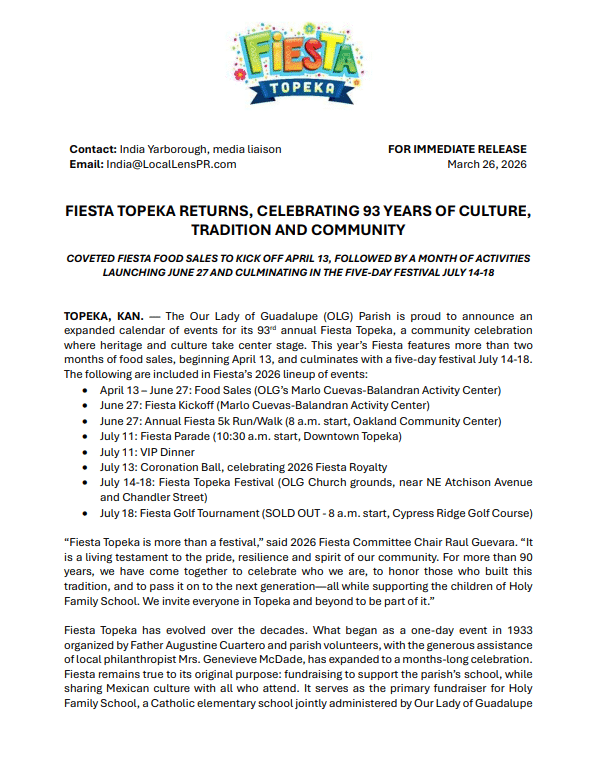

In Topeka, Fiesta Topeka is one of those. You don’t just go to it. You grow up around it. You mark time by it. You know it’s coming before anyone says a word—because the food sales start, the conversations shift, and suddenly, summer feels close again.
And this year, it all begins April 13.
From those early food sales through the final night of the festival on July 18, Fiesta stretches across nearly three months. Not because it has to—but because that’s what it’s become. Something too big, too rooted, to fit into a single weekend.
It Started Small. It Didn’t Stay That Way.
Back in 1933, this was a one-day event. A fundraiser. A parish effort led by Our Lady of Guadalupe Parish, with help from the community.
That part hasn’t changed.
What has changed is everything around it.
Now it’s one of the longest-running Hispanic celebrations in the country—still serving the same purpose: raising money for Holy Family School, still grounded in the same values, just… bigger. Broader. More layered.
But here’s the thing—Fiesta never outgrew its roots. It expanded around them.
You Can’t Fake Something Like This
There’s no shortcut to what Fiesta is.
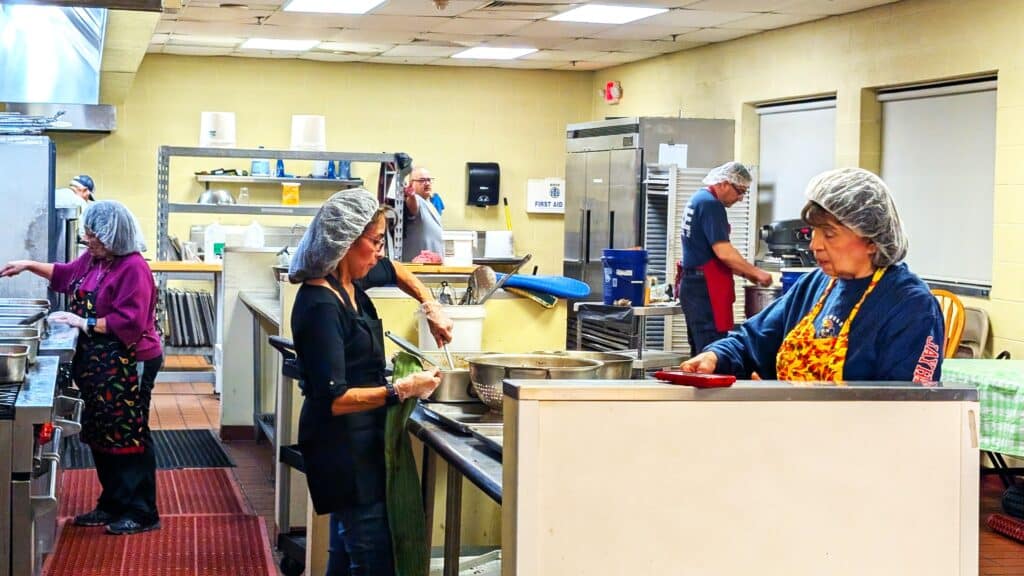
Every plate of food? Made by hand.
Every shift? Covered by volunteers.
Every detail—from the parade floats to the festival grounds—put together by people who aren’t doing it for recognition, but because this is theirs.
And you feel that when you’re there.
It’s in the way families show up year after year. The way names repeat across generations. The way someone will point and say, “My grandma used to run that booth,” like it’s both a memory and a responsibility.
This isn’t a production.
It’s participation.
More Than a Festival—It’s a Season
Fiesta doesn’t hit all at once. It builds.
First the food sales—quietly at first, then steadily.
Then the kickoff in late June. The 5K. The parade weaving through downtown. The Coronation Ball. And finally, the five-day stretch in July where everything comes together.
It’s not one moment. It’s a progression.
And by the time you reach the festival grounds, it feels earned.
Culture You Step Into, Not Just Look At
Some events invite you to watch.
Fiesta invites you in.
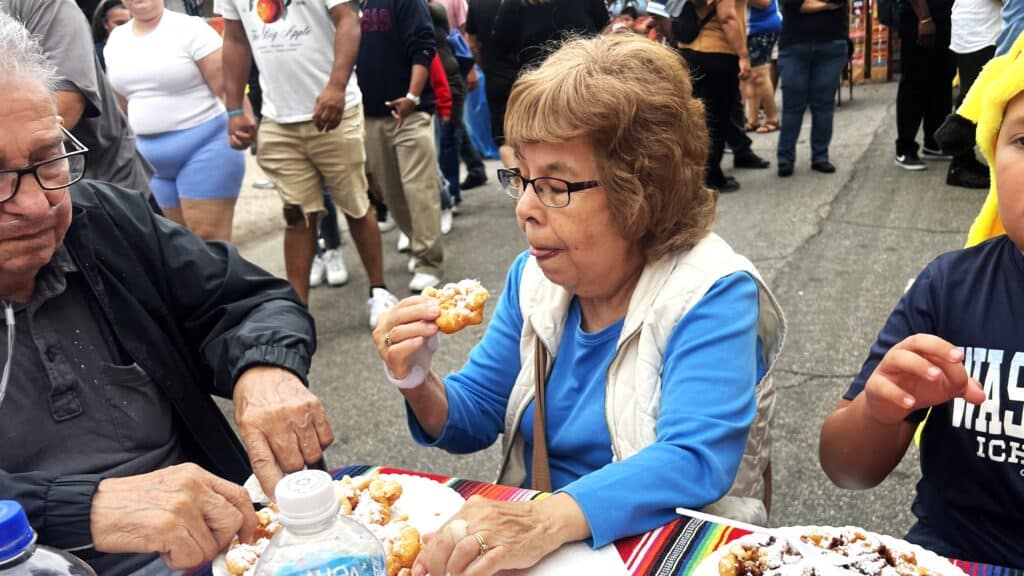
You don’t stand on the outside of it—you move through it. You eat the food, hear the music, recognize the faces, and before long, you’re part of it whether you meant to be or not.
That’s why it lasts.
Not because it’s old—but because it’s alive.
For 93 years, this city has kept it that way. Families have carried it. Volunteers have rebuilt it every single year. And each summer, it shows up again—not as something preserved, but as something still moving forward.
And in a city that’s constantly trying to define itself, Fiesta doesn’t have to.
It already knows exactly what it is.