

By Andrew Evans aka the Pickleball Librarian
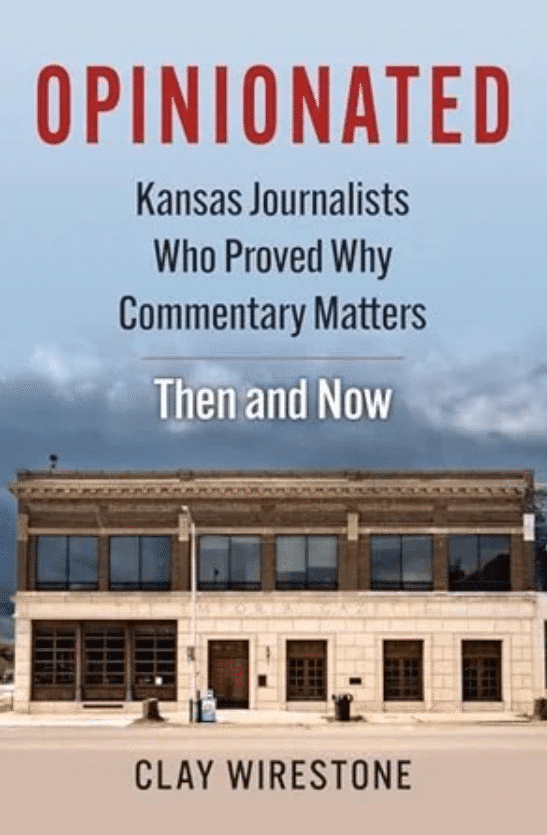
“Opinionated: Kansas Journalists Who Proved Why Commentary Matters—Then and Now” by Clay Wirestone is an excellent book dropping on September 29, 2026. Even if you don’t live in Kansas or have a strong connection to the state, this book is a must read!
The research is incredible! Even though I’ve obtained three graduate degrees from various universities in Kansas, Wirestone digs up stuff I’ve never known about. It is one of the best non-fiction books I’ve read this year. It is also one of the best Kansas and news-related books I’ve ever read!
While it is like drinking water from a firehouse, it also leaves you wanting more, and that more is available! Wirestone shares pictures of buildings that are still standing, and information from articles, interviews, and podcasts the reader can dig up. He even gives you a section called “Further Reading.” In addition to accessing these resources and learning more about the people mentioned in “Opinionated,” I want to hit the road and visit some of the places described!
The book starts with explaining how Kansas held a place of unique importance leading up to the Civil War. It was an environment where abolitionists and pro-slavery forces had their own newspapers and were often engaged in a battle of words. “A flabbergasting 733 newspapers were being published.”
Kansas was the center of the country. Settlers on both sides of the issue moved into Kansas to help change the balance of slavery issue. That tradition of publishing commentary continued into the next century.
“Opinionated” provides condensed biographies for a dozen historical Kansas editorial writers from the 1920s through 1970s in various cities and towns. This time period can easily be considered the golden age of newspapers. As an example, Colorado Springs, my hometown had two daily newspapers. In the 80s after that golden age, one of those disappeared.
In between those biographies for the golden age, Wirestone provides insights into how things have changed and does an excellent job of connecting the past with the present. “But we live in a compressed age, one in which pithy social media posts and 20-second video blasts dominate the conversation. Have courage to take the time and space needed for a mature, nuanced argument.”
The book discusses the importance of local opinion writers and how they gave small towns the attention they needed to prevent them from slowly losing “their vitality” and proving they matter. Local papers provide lots of support. Residents feel like they have a champion. They stay hopeful and feel like things are getting accomplished. They feel part of something larger than themselves!
In his chapter on Jack Harris of Hutchinson, Wirestone discusses the importance of having local staff and the problems with corporate news ownership. In 2023, the Hutchinson News ran a front-page story about Hutchinson senior citizens, except these were seniors in Hutchinson, Minnesota! The hedge fund ownership based in New York was out of touch with the local community.
Parts of the book made me nostalgic for the old days of staffed newsrooms and the smell of newsprint in each town. Thankfully, the future of local newspapers may not be so bleak. The Hutchinson, Kansas story helped motivate a high school student to start an online newspaper for the community that provided quality editorials and local news.This might be the wave of the future and a way to keep the community connected.
One of my eye-opening chapters was African American journalist Nick Chiles of Topeka. I’ve studied a lot about black history in the area, and was surprised to learn material I missed about Chiles. History teacher Sonja Czarnecki unearthed a lot of great material about him. I’m planning to read her article about him in the journal Kansas History.
I also loved Wirestone’s commentary and research about how this country is where it is politically. He discusses the divide between the urban and rural areas and offers many examples of how rural communities evolved politically. After World War II, the population shifted even more from rural areas to urban centers. Rural areas then had a lot of respect for business owners who stayed and created jobs. This helped alter the community’s politics, as business owners encouraged the community to “support anti-union laws and tax policies generous to businesses.”
Wirestone talks about the difficulty of communicating today when folks are so entrenched in their side of the political spectrum. He explains how newspaper commentary can become a two-way interaction with the community. They can shape each other! At the same time the community can change, so can the editorial views. If we can open up that kind of dialogue again, maybe more of us would look out for the common good.
I highly recommend this book to anyone interested in Kansas history. This is also a great book for those interested in journalism and media history. The advice for future editorial writers is excellent. If you’re interested in the history and evolution of editorial writing or media history, this is the book!