
By This Is Topeka | November 23, 2026
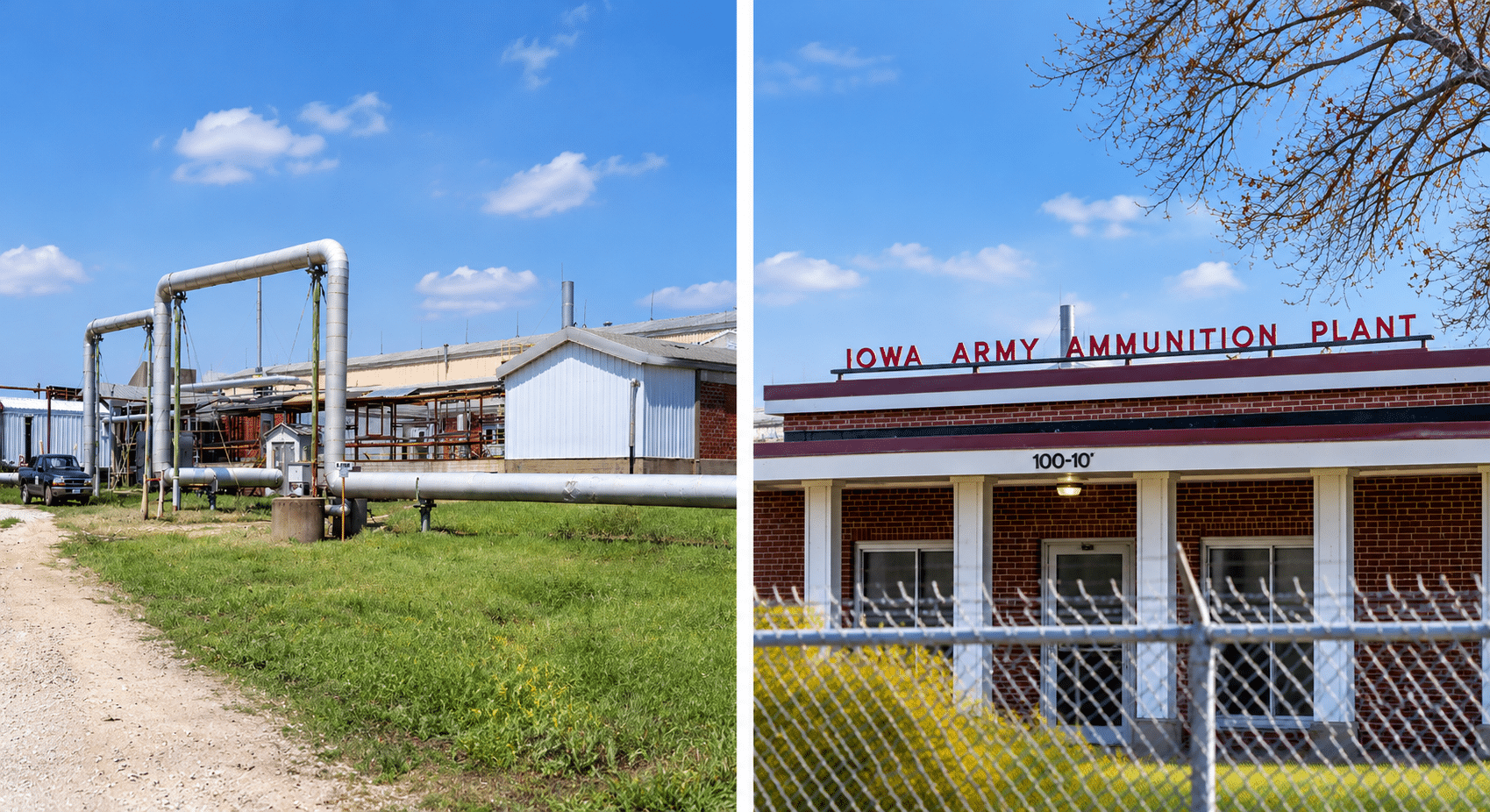
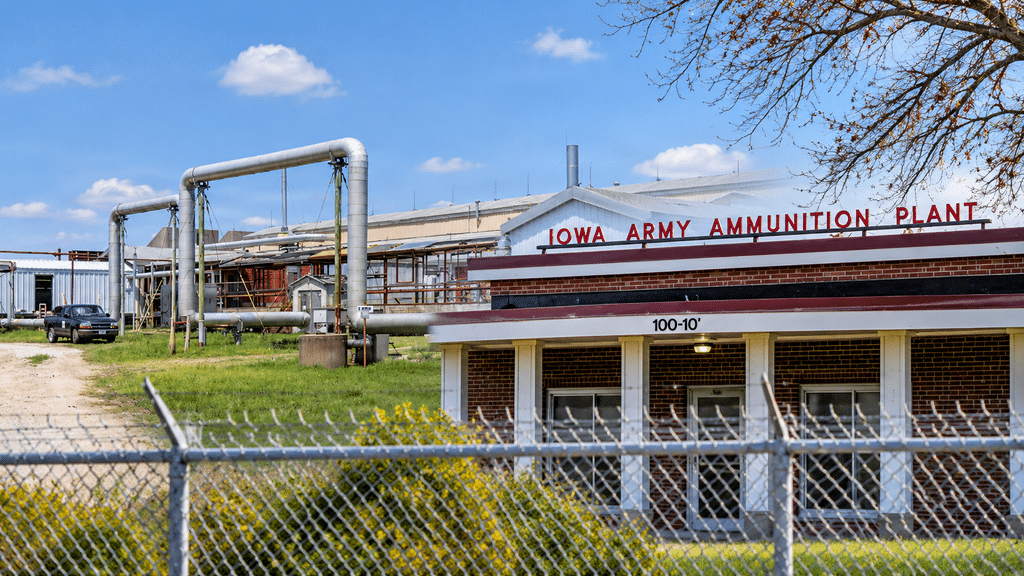
MIDDLETOWN, Iowa — The U.S. Army is preparing to detonate approximately 9,700 pounds of deteriorating lead azide at the Iowa Army Ammunition Plant on Wednesday, November 25, raising environmental concerns about the potential release of thousands of pounds of toxic lead into the atmosphere.
The planned operation has prompted questions about how far airborne lead particles could travel, whether surrounding communities could experience contamination, and whether the resulting plume could eventually threaten parts of Kansas.
Although currently reported dispersion estimates do not place Kansas within the primary area of concern, the possibility of airborne contamination spreading across state lines makes this a developing regional environmental story.
Nearly 7,000 Pounds of Lead in the Explosive Material
Lead azide is a highly sensitive explosive compound commonly used in detonators and other military applications. The material scheduled for destruction contains an estimated 6,900 pounds of lead by chemical mass.
That does not mean all 6,900 pounds will enter the atmosphere. Some material could remain at the detonation site or settle nearby. However, the possibility that lead-containing particles could become airborne has raised concerns about exposure in surrounding communities.
Unlike many other pollutants, lead does not break down into harmless substances over time. It can persist in soil and sediment, potentially creating exposure risks long after an initial release.
Lead exposure is particularly dangerous for children, who can experience neurological and developmental harm even at relatively low levels. Adults can also experience adverse effects involving the cardiovascular system, kidneys and nervous system.
How Far Could the Fallout Travel?
Reports surrounding the planned detonation have discussed potential airborne dispersal extending approximately 100 miles from the Iowa facility, with lead-dust deposition potentially occurring over a smaller area.
However, these distances should not be interpreted as a circular contamination zone.
Airborne particles move according to wind direction, wind speed, atmospheric stability, precipitation and the height at which material enters the atmosphere. Depending on conditions, a plume may travel primarily in one direction rather than spreading evenly around the detonation site.
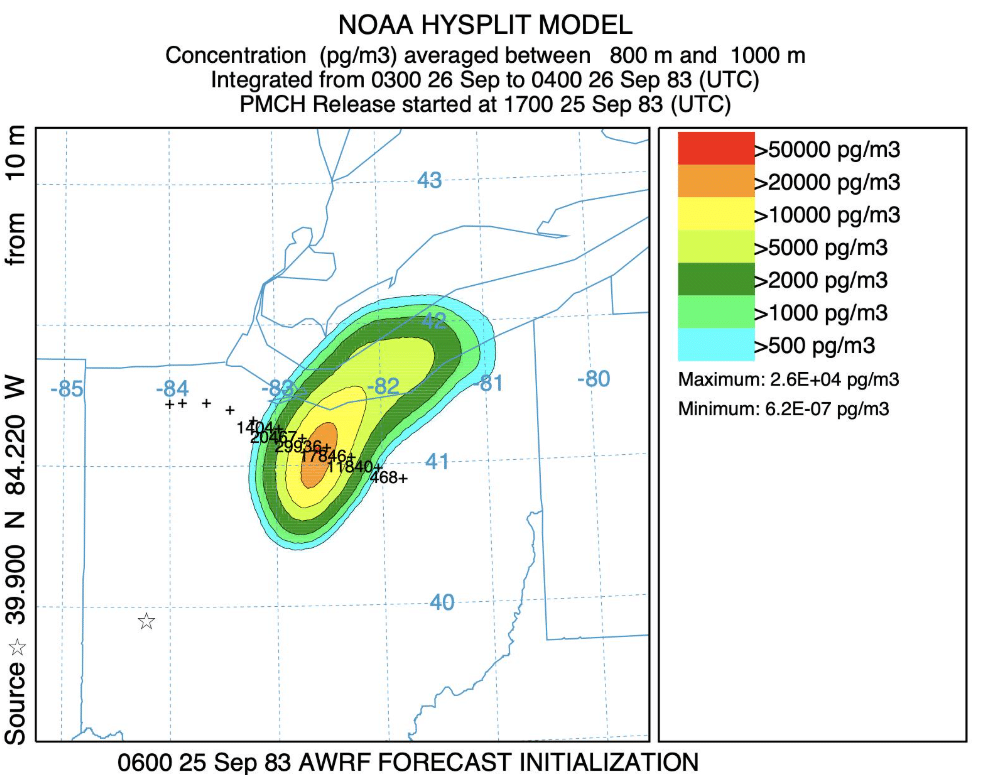
The Army’s previously published modeling projected a plume across portions of eastern Iowa. Officials in northeastern Missouri have also expressed concern about possible effects if atmospheric conditions carry particles southward.
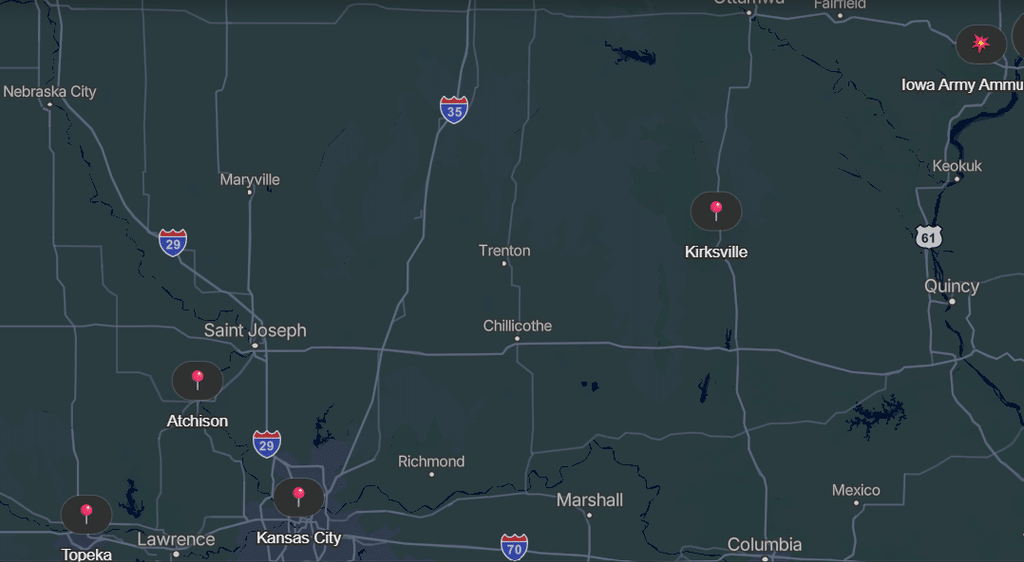
Kansas lies farther southwest of the facility. Even the northeastern corner of Kansas is beyond the approximately 100-mile potential dispersal distance discussed in reporting.
At this time, there is no verified projection showing hazardous lead concentrations reaching Kansas.
Nevertheless, because the operation has been postponed multiple times and atmospheric conditions can change, updated modeling will be essential to determining the actual direction and extent of the plume.
Why Kansas Should Pay Attention
For northeastern Kansas communities, including Atchison, Leavenworth, Kansas City and Topeka, the immediate concern is not an established contamination threat but whether environmental officials are adequately monitoring a potentially significant airborne release in the region.
The Iowa Army Ammunition Plant is located near Middletown in southeastern Iowa, hundreds of miles from Topeka.
A plume extending south or southwest would encounter portions of Missouri before approaching Kansas. Under the currently reported estimates, Kansas remains outside the projected impact area.
However, the release of lead-containing material raises broader questions about interstate environmental monitoring, public notification and long-term contamination.
Residents should not have to rely solely on predictions made before an explosion to understand whether their communities are safe afterward.
Actual air-monitoring results, soil sampling and independent verification will be important in determining whether the detonation produces measurable contamination beyond the installation.
The Army Says the Material Is Too Dangerous to Move
According to the Army, the lead azide has deteriorated to the point that transporting or handling it could create an unacceptable risk of accidental detonation.
Military officials maintain that controlled destruction is necessary to prevent a potentially more dangerous incident.
The Environmental Protection Agency issued an emergency hazardous-waste permit on November 13, allowing the Army to proceed under emergency circumstances.
But the operation has also generated legal and environmental objections.
Environmental advocates have questioned whether alternative disposal methods received adequate consideration and whether the potential consequences of releasing lead-containing particles into the environment have been sufficiently evaluated.
A federal appeals court temporarily stayed the EPA permit, complicating the operation’s legal status. The Army has asserted separate emergency authority to proceed with the destruction.
The dispute highlights an uncomfortable question: When hazardous military explosives become too unstable to move, should surrounding communities be expected to accept the environmental consequences of destroying them in place?
The Danger Does Not Necessarily End When the Smoke Clears
One of the most important concerns surrounding the detonation involves what happens after airborne particles settle.
Lead deposited on agricultural land, residential property, waterways or other surfaces can remain in the environment.
Potential exposure pathways include inhaling contaminated dust, ingesting contaminated soil and consuming food produced in contaminated environments.
The presence of lead does not automatically establish a dangerous exposure level. Concentration, particle characteristics and the duration and route of exposure all matter.
That distinction makes post-detonation testing especially important.
A successful explosion from the Army’s perspective does not, by itself, establish that the operation caused no environmental harm.
Wednesday’s Weather Could Determine the Direction of the Plume
The detonation was initially scheduled for November 20, then postponed to November 23 before being moved to Wednesday, November 25.
Weather and safety preparations have been cited in connection with the delays.
Iowa health officials have indicated that updated atmospheric dispersion modeling is expected before the operation, including forecasts approximately six hours before detonation and subsequent updates.
Those projections should provide a clearer picture of which communities could be downwind when the explosives are destroyed.
For Kansas, the most significant development would be any substantial southwestward shift in the projected plume accompanied by evidence that airborne particles could travel farther than currently anticipated.
What This Is Topeka Will Be Watching
As Wednesday’s operation approaches, This Is Topeka will be watching for updated Army dispersion maps, changes in weather conditions, environmental monitoring results and any public-health advisories affecting Missouri or Kansas.
We will also be looking for evidence of independent testing after the detonation.
The Army maintains that the destruction is necessary because of the immediate danger posed by the unstable explosives. Environmental advocates argue that protecting communities from one danger should not create another.
Both concerns deserve scrutiny.
For now, Kansas residents should understand that there is no confirmed hazardous fallout forecast for the state, and the reported potential dispersal distances do not extend into Kansas.
But an operation involving nearly five tons of lead-based explosives, thousands of pounds of toxic metal and the possibility of interstate airborne contamination warrants transparency well beyond the boundaries of a military installation.
The question is not simply whether the Army can safely detonate the explosives. It is whether officials can demonstrate, with actual environmental measurements, where the lead went afterward.
Sources and further reading:
- U.S. Army, November 15 Public Advisory and Atmospheric Dispersion Information
- U.S. Army — Iowa Army Ammunition Plant
- U.S. Environmental Protection Agency, November 13, 2026, emergency hazardous-waste permit.
Editor’s note: This article distinguishes potential atmospheric dispersion from confirmed contamination. The reported dispersal estimates are not measurements of actual lead exposure. Forecasts, legal developments and operational scheduling may change before November 25.