

By Jeffery W. Fogg II
Every June, rainbow flags appear across America.
They fly from homes and businesses. They hang in storefront windows. They wave from parade routes in cities large and small. Today, the rainbow flag is one of the most recognizable symbols on Earth.
What many people don’t realize is that the man who created it wasn’t from San Francisco, New York, or Los Angeles.
He was from Kansas.
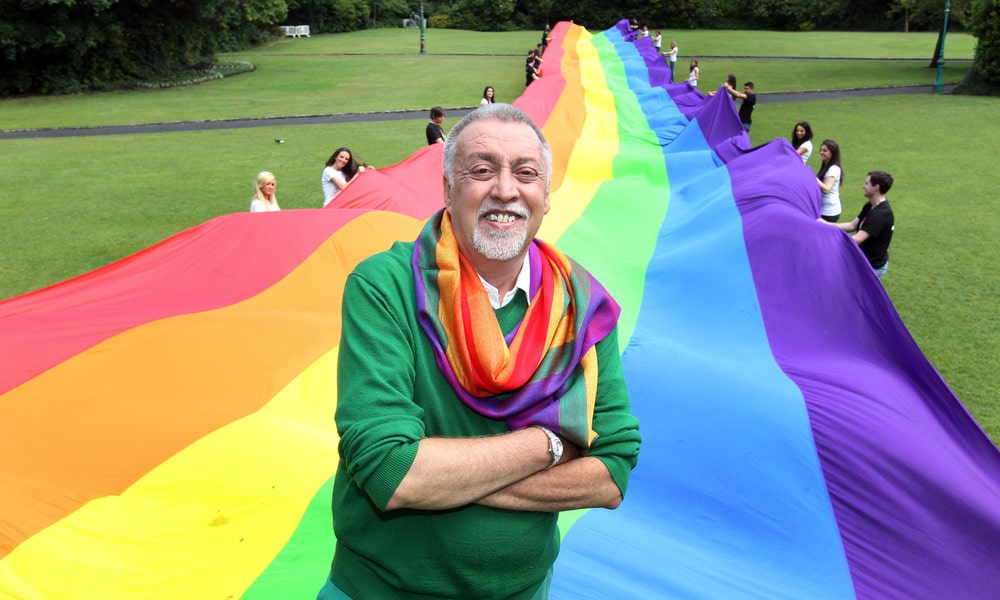
Gilbert Baker, the artist and activist who designed the original Pride flag in 1978, was born in Chanute and grew up in Parsons, two small communities in southeast Kansas.
Long before the rainbow became an international symbol of equality, visibility, and pride, Baker was a Kansas kid growing up on the plains.
After serving in the U.S. Army, Baker was stationed in San Francisco during a period of enormous social change. There he became involved in the growing movement for LGBTQ rights and met activist Harvey Milk, one of the most influential figures in American civil rights history.
Milk encouraged Baker to create a symbol that could unite people and represent hope.
What Baker created would eventually become one of the most recognized flags in the world.
The first version of the Pride flag debuted in San Francisco in 1978. It featured eight colors, each representing a different aspect of human experience and community. Over time, the design evolved into the six-color rainbow that most people recognize today.
More than four decades later, the flag has become a global symbol.
It has appeared in celebrations, protests, memorials, weddings, court victories, and moments of both joy and struggle. It has flown in countries where LGBTQ people enjoy legal protections and in places where simply displaying it can be an act of courage.
And it all traces back to a Kansan.
There is something uniquely American about that story.
A kid from a small Kansas town serves his country, follows his convictions, creates something meaningful, and leaves a mark on history that reaches far beyond the place where he started.
Whether someone sees the Pride flag as a symbol of identity, equality, freedom, visibility, or simply the belief that every person deserves dignity, its origins are rooted in a simple idea: people should be able to live honestly and openly as themselves.
That message has traveled a long way from southeast Kansas.
This Pride Month, while rainbow flags fly across the nation and around the world, Kansans can take pride in knowing that one of the most recognizable symbols of the modern civil rights era was created by one of our own.
Sometimes history starts in the places people least expect.
Sometimes it starts in Kansas.