

By Mack Callahan
If you ever wonder how seriously Topeka takes its relationship with firearms, don’t check a policy statement or a press conference. Just check the jail log.
In a single 24-hour stretch, at least four people were booked on firearm-related charges in Topeka—spanning alleged aggravated assaults, unlawful discharges, intoxicated gun possession, and criminal damage tied to gunfire. Different ages. Different neighborhoods. Different circumstances. Same result: another day where guns did the talking.
Let’s walk through the highlights—because apparently, this city insists on them.
Aggravated Assaults, Now Featuring Weapons
Two separate bookings involve aggravated assault with a deadly weapon, each paired with aggravated battery allegations. These are not technical violations or paperwork errors. These are cases where prosecutors allege someone intentionally used a weapon in a way that could seriously injure or kill another person.
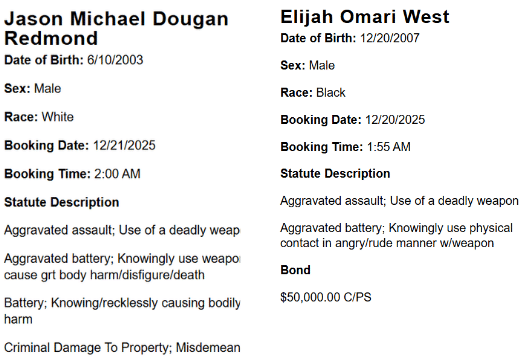
In both cases, NO bond.
That’s not symbolic. That’s a signal.
Drugs, Alcohol, and a Firearm—All at Once
Another arrest reads like a checklist of “what not to combine with a gun”:
- alleged possession of narcotics,
- alleged use of drug paraphernalia,
- alleged DUI,
- alleged criminal discharge of a firearm, and
- alleged possession of a firearm while under the influence.
Bond was set at $250,000.
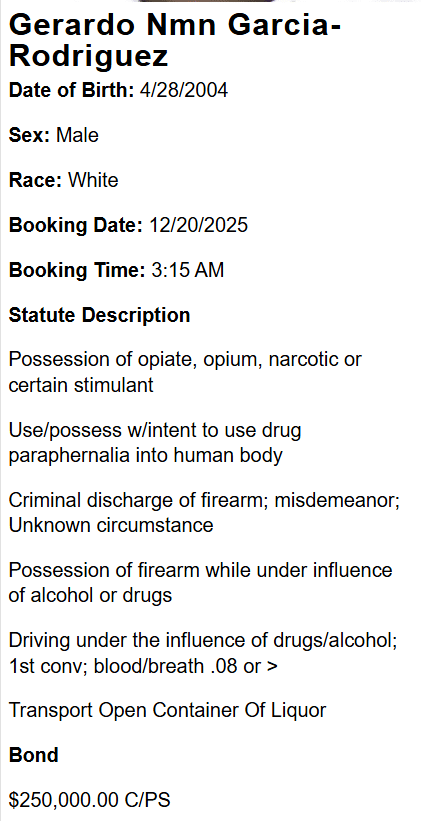
That’s not because someone forgot to signal a lane change. That’s because firing—or allegedly firing—a gun while impaired is how people who weren’t part of the situation end up in the hospital or the morgue.
Gunfire and Property Damage
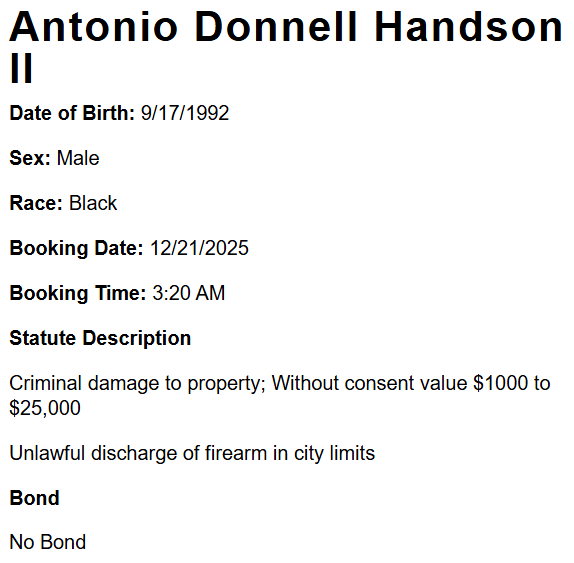
Then there’s the familiar charge we keep seeing: unlawful discharge of a firearm within city limits, paired with criminal damage to property.
No bond.
Because once bullets start flying, the law stops pretending this is just another bad decision and starts treating it like the public-safety threat it is.
Four Arrests. One Day. Same Pattern.
These cases span ages from late teens to adults in their 30s. They involve different alleged motivations—anger, intoxication, recklessness—but they all share the same underlying reality:
Too many people in this city are treating guns like punctuation marks.
Exclamation points for arguments.
Periods for disagreements.
Ellipses for bad nights that spiral out of control.
And while online debates keep circling the same tired talking points—“soft on crime,” “mental health,” “bad neighborhoods,” “good guys with guns”—the jail log keeps quietly documenting what actually happens when access, impulse, and conflict collide.
This isn’t about ideology. It’s about arithmetic.
Four firearm-related arrests in 24 hours means dozens of responding officers, terrified bystanders, disrupted neighborhoods, court resources tied up for months, and victims who now have to live with whatever comes next.
Tomorrow, there will be new names.
New charges.
New mugshots.
And the same question Topeka never seems to answer:
How many more 24-hour cycles like this are we willing to call normal?